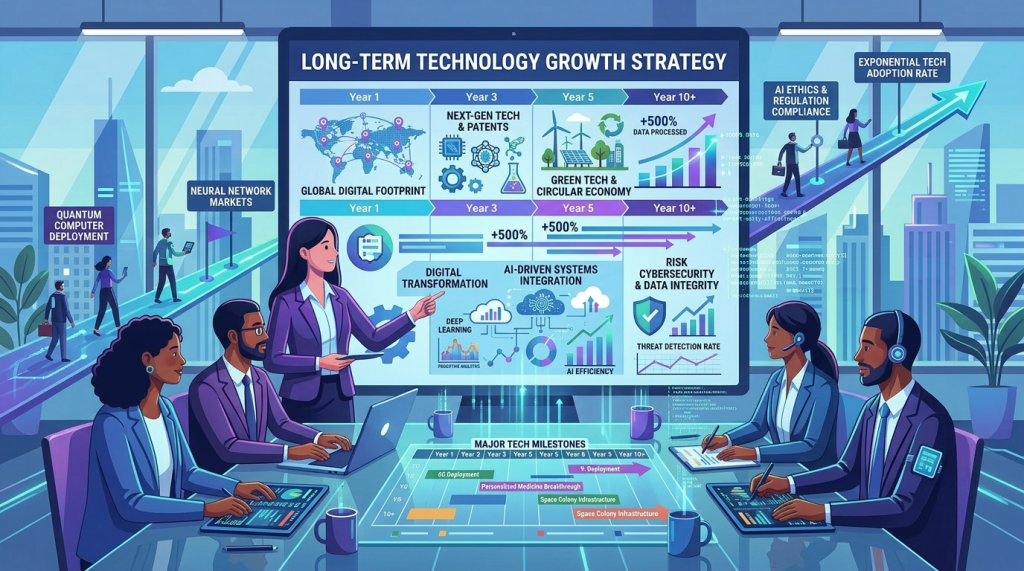
As the Chief Financial Officer of a rapidly expanding enterprise, Lisa was no stranger to high-stakes decisions. However, her latest challenge was particularly daunting: determining whether the company should invest millions in a new technology platform to support its customer care department. With the department handling millions of inquiries annually, the pressure was mounting. Lisa fully understood the operational necessity, but as CFO, she needed to ensure this decision would remain financially sound and scalable over the next decade.
To navigate this, Lisa employed a rigorous, rational decision-making framework. This process began by identifying the criteria that would have the most profound impact on the decision’s long-term outcome. Rather than focusing solely on immediate implementation costs, Lisa established four critical pillars of evaluation:
- Total Cost of Ownership (TCO): Including licensing, maintenance, and upgrade paths over 10 years.
- Scalability: The system’s capability to handle a $15% annual growth in customer volume without exponential cost increases.
- Integration Efficiency: How seamlessly the software connects with existing legacy databases to minimize friction.
- Risk and Compliance: Ensuring state-of-the-art security protocols to protect sensitive customer data over the long term.
With her criteria firmly locked, Lisa evaluated three possible alternatives. Option A was a market-leading enterprise software with a high upfront cost but a highly predictable, flat-rate scaling model. Option B was a modular, cloud-native startup solution that was incredibly cheap initially but carried volatile user-based pricing that could skyrocket as the company expanded. Option C involved heavily customizing their legacy in-house systems—the lowest immediate cost, but carrying a massive risk of technological obsolescence within four years.
By scoring each alternative against her weighted criteria, the choice became objectively clear. Option A, despite its intimidating initial price tag, emerged as the most rational financial decision. Its predictable cost structure and proven scalability meant that as customer volume doubled over the decade, the cost per customer interaction would actually plummet. By removing emotion and short-term bias from the equation, Lisa successfully secured a technological foundation that can grow with the business.
Key Takeaways
By using a rational decision-making framework, Lisa was able to strip away short-term cost biases and objectively evaluate technology alternatives against long-term scalability and financial predictability. This methodical approach ensured that the company’s multi-million-dollar investment would securely and cost-effectively support its massive customer base for the next decade.
 Corporate Dive
Leave a comment